Was it the lure of gold?
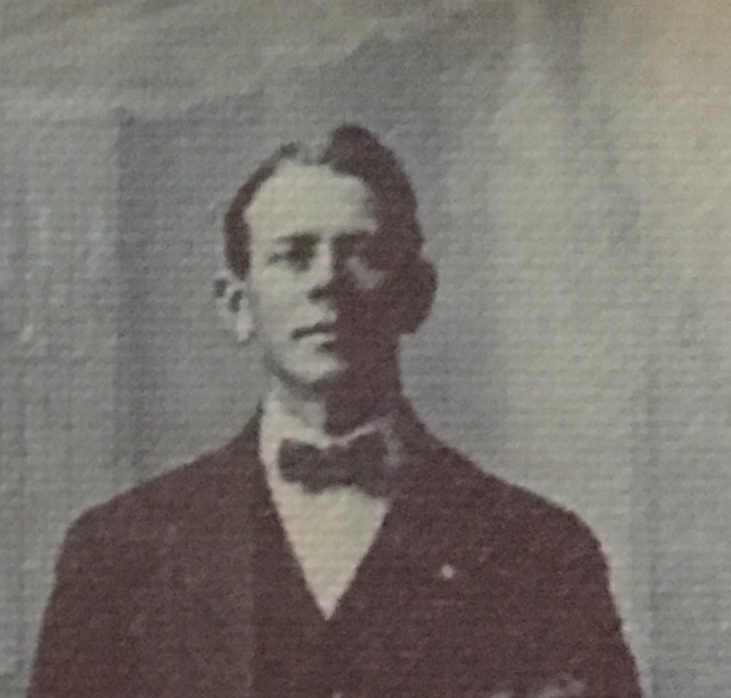
Was it the lure of gold that enticed my grandfather from his home in Sweden? History tells us that thousands of Swedes migrated from the cold Swedish climate to countries with more temperate weather, and favourable economic conditions. Most arrived at the immigration building on Ellis Island, New York, with a dream of becoming American citizens; some sought a new beginning in younger, emerging economies, where gold had more recently been discovered.
Family folk-lore tells the story of my grandfather stowing away on a ship when he was young, and travelling the world for many years before settling in the hot, dry continent of Australia.
Did he slip unnoticed onto a ship being loaded in Gothenburg Harbour? When discovered, was he put to work as a deckhand to pay his passage to the next port?
Old London Town
Grandfather’s journey took him to London, at least once in his travels. A postcard from his brother, addressed to the Scandinavian Sailor’s Home, London, found him there, and is now in the safe keeping of my aunt, Grandfather’s daughter. Sadly, the date is not visible on the post-card so we have no way of knowing when he was in London, but I’d like to think it was early in his travels.

Shipping records are full of the names of crew members and passengers, but I have not found any verifiable records of Grandfather’s journey. He was born Adolf Bergman in Gothenburg (Göteborg) in 1877, and died Alfred Berg in Bankstown, 1959, (having anglicised his name). Did he use other names while travelling? Did he indulge in the practice of slipping onboard a ship with the help of crew members, and working in exchange for food, lodging and passage? Names of those ‘extra’ crew were not usually recorded in the ship’s manifest – they were just there.
Did he return to Sweden?
Records suggest that Grandfather arrived in Sydney, New South Wales (NSW) in 1902, from Wellington New Zealand, but thus far none of the details have been verified (dates, places and times are recorded on Grandfather’s application for Naturalisation in 1911). Despite arriving in Sydney, it seems the lure of gold may have enticed him to Kalgoorlie, which is where he reported having lived for five years prior to 1911.
Surprisingly, a 1910 Swedish Household document indicates Grandfather was with his mother and siblings in Göteborg, and that he was working as a warehouse assistant in that year. Perhaps he visited his family and took a casual job in the warehouse with his brother, Axel? Or did he intend to stay, but found he missed what he’d left in Australia? We may never know.
From 1911, Grandfather’s journey is more accurately documented. He married Edith Atkinson in Sydney, NSW in 1912. Together they had ten children, nine survived infancy. Registration of the births of their children, and Electoral Rolls, provide a reasonably reliable roadmap of their lives.
Harmful Accusations
Alfred and Edith held the job of Postmaster in the small NSW town of Yetman, near Tenterfield, in 1915. Their first son, Norman, was born that year but sadly died six months later, and the Great War of 1914-1919 was the focus of everyone’s attention, with many Australians enlisting, including Edith’s brother and cousins.
During the First World War, men, women and children of Austro-Hungarian or German descent were interned in camps in Australia under an ‘enemy-alien’ policy. Even if they were born in Australia, with Australian wives and children, they were interned and many were deported to Germany after the war. The policy urged Australians to report anyone who they believed were ‘Enemy Aliens’. Grandfather’s Swedish accent brought him to the attention of one citizen of Yetman who reported him as being an enemy alien, despite legal documents that proved Grandfather’s Swedish birth and nationality. It might well have been Australia’s involvement in the war that prompted Grandfather to anglicise his Swedish name, but no documentation has been found to suggest when or how this happened.
Because a suspicion of ‘enemy alien’ was raised, the government had to investigate. Apparently only one resident of Yetman considered the Bergs to be a risk, citing Grandma as being pro-German. When a public meeting was called, it seems the whole town attended. When Yetman’s residents had to vote on whether or not they considered the Bergs to be loyal citizens, all but one rose to vote in the affirmative. A formal letter was drafted to inform Grandfather of the outcome, and the family remained in Yetman for a number of years. A newspaper item found recently suggests that Grandfather served as Secretary on a community committee in Yetman.
Ironically, Grandfather’s employment was linked at times to the NSW Railway. My great-grandfather, Otto Bergman, was employed by the railway in Sweden, and met an untimely death at Partille Station, in 1884, when Grandfather was only seven years old. While alighting from a slowly moving carriage, Otto slipped and fell onto the track. I would like to think that death came as instantly as was reported in the press at the time, and he did not suffer.
On the Swedish Household Register in 1900, Grandfather is listed as living in an orphanage. I’d been raised with the story that the three children were placed in an orphanage after Otto’s death, but in 1900, Grandfather’s siblings resided with their mother, according to the Household Register of that year. Was Grandfather a troubled thirteen year old without a father’s guidance? Is that why he was in the orphanage, and why he sought a future in a foreign land? We will probably never know.
Despite living in Kalgoorlie for five years, Grandfather obviously never found the elusive piece of gold that would make him rich, but I wonder what he would have done if he had found it?
Would he have returned to Sweden?
We will never know…
 The Family History Vault