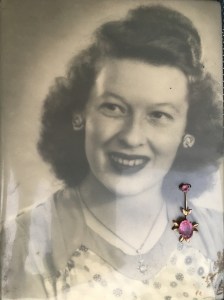
Today, she would have celebrated her 102nd birthday.
I imagine she would have raised a Bailey’s to toast another milestone year, joked with family about ‘getting older’, and still outrun her great-grandchildren in a race across the park.
On the 10th January, 1924, Betty Sneesby was born. Perhaps being the firstborn to her parents, Ruby and Claude, made her somewhat special: a bit of a larrikin; a tomboy; a debutante. She was all of these in her younger days, but age didn’t diminish her willingness to have a go at anything, or to stand up for what was right.
Her father fought at Gallipoli in the Great War of 1914. As a trumpeter in the Lidcombe band, he was assigned the role of Bugler in battle. When the war ended, Claude became an accomplished boxer. Perhaps it was his way of releasing some of the horrors he had seen in the trenches on the other side of the world.
Claude taught his daughter the finer points of defending herself and anyone else who found themselves on the wrong side of local bullies.
Despite her fearless approach to life, Betty could just as easily don a ballgown and be the belle of the ball, or tap dance with a local dance troupe to entertain soldiers. During the war that was never meant to be, following the war that was “meant to end all wars1“, Betty was engaged to a young soldier, whom she married on the 29th January, 1944.
World War II
Tommy Berg was so handsome with his blonde hair and blue eyes, it was easy to see how the beautiful young Betty could fall in love with him. War may have separated them while Tommy fought with the Australian Army in New Guinea, but peace brought them together again when the guns were finally silenced.
Many years and five children later, Tommy succumbed to a terminal illness in March 1995. Betty continued on, just as she had when faced with any hardship throughout her life. Always the life of the party, and always with the love of her children, grandchildren, and eventually great-grandchildren at the centre of her universe.
And the tough years?
The early years were hard, but Betty never complained. She just got on with it.
Whether it was carting buckets of water to the chooks2 at the other end of the farm, or using a hessian bag soaked in water to beat flames threatening the house, she just did it.
After Tommy’s death, Betty stayed in their home on the northern side of Brisbane, where they had migrated to from Sydney years earlier. Surrounded by friends and family, Betty engaged in a rigorous social life, often dictated by wherever the like-minded seniors of the Crazy Gang were meeting for coffee that day.
On the 11th November3, 2015, Betty left this earthly life to join her family and loved ones on the other side. It was a sad day for those left to mourn her, but a fate we must all one day face.
Betty’s Legacy
Betty raised a son and four daughters. Each one benefited from watching a strong woman deal with whatever a hard life threw at her.
Never afraid to stand up for what was right.
Never afraid to work hard.
And she never complained.
So today, we, the children of Betty Sneesby and Tommy Berg, celebrate the life of a remarkable woman, our mother.
We honour Betty by trying to live up to her standards in our own lives.
We honour Betty by telling our children and grandchildren about how strong their grandmother and great-grandmother was.
We honour Betty by never forgetting the sacrifices she made for all of us.
So, today we raise a toast to what would have been Betty’s 102nd birthday. And we know she will be kicking up a storm on that other side of life, still the life of the party, and still outrunning everyone.
On a recent trip to Perth, Western Australia, I was fascinated by the sequence of dates immortalised on the footpaths within the Central Business District, so I started paying more attention.
The first date I photographed was my birth year (no, not the ones featured below), followed by the birth years of significant others in my life. I remember wondering if there was likely to be any relevance between the year and the name on the stone blocks, so I reached out to Google.
Ironically, the name on the paver of my birth year was F. E. Chamberlain, a union delegate who became the State Secretary of the Labor Party in Western Australia. I was flabbergasted: I was active in the Teachers Union throughout my career, and joined the Labor Party for a rather short-lived involvement in politics in the nineties. Falling asleep in a meeting after a long day in the classroom dampened my enthusiasm somewhat, and probably didn’t do much for the guest speaker’s confidence. But there it was – F E Chamberlain: union delegate and politician. I took that as a connection.
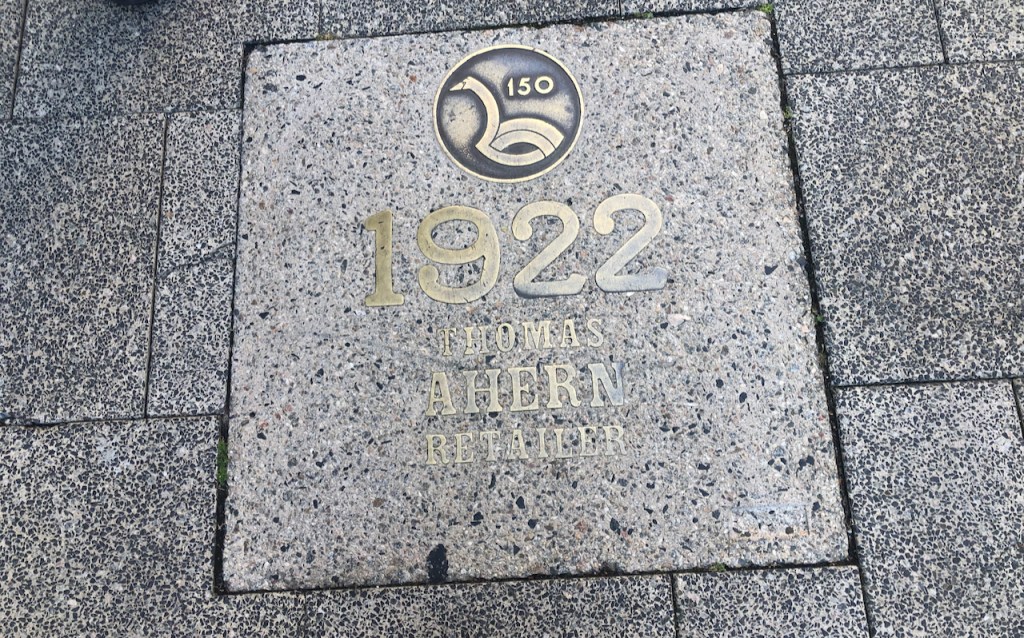
Since this site is my Family History Vault, I reached for the photo of my father’s birth year: 1922.
The name and occupation on the paver is Thomas Ahern, Retailer. Dad did his share of retailing over the years as an insurance and car salesman when he wasn’t driving taxis, and he certainly kept a few clothing retailers in business. Dad’s taste in clothes and shoes leaned towards extravagant. Not the kind of extravagance of the wealthy, just the ordinary variety of a large family living within a tight budget.
There was an immediate connection between Dad and Thomas Ahern in their Christian names. Dad was christened Alfred Thomas Berg, but was known to everyone as Tom or Tommy. As I read through the account of Thomas Ahern’s life, I struggled to move on from the first few paragraphs; the account of his life before he arrived on Australian shores.
Thomas Ahern was born in Ireland, as were my father’s maternal ancestors. Thomas Ahern’s mother was Mary McGrath, and two of the places Thomas found employment were Kilkenny and Tipperary. Dad’s Irish great-grandparents, John Spencer and Catherine Grainger, were from Tipperary, and another great-grandmother, Catherine McGrath, was from Kilkenny.
The next significant block is 1924, the year of my mother’s birth.
Phillip Collier was born at Woodstock near Melbourne on 21 April 1873 and became Premier of Western Australia in 1924, the year my mother was born. Mum didn’t share Collier’s passion for politics, but she was just as determined to speak up for what was right and support anyone who needed help, albeit without the wages afforded to politicians. The name Collier is linked to our closest neighbours in the 1960s – brothers Nick and Bill Collier, although I doubt they were any relation to the illustrious Labor leader and Perth Premier Phillip Collier.
It seems even a long-overdue trip to Perth can become a genealogical stepping stone. Not because of a direct link to my family research, but because a few photos taken along the way can relate, even indirectly, to someone in my family tree. I only searched for the birth years of my closest relatives, but a more thorough investigation may have unearthed more interesting facts. .
I did spend a few hours in the State Library looking for clues to my Swedish Grandfather’s time in Kalgoorlie in the early 1900s, but I’m still no closer to any facts, so my search continues.
In Australia, in the late nineteenth/early twentieth century, illegitimate was a word that had serious connotations. It wasn’t enough to say you were married when registering the birth of a child, you seemingly had to provide a date for the said marriage. If there was no marriage date, it was likely that the child was labelled ‘illegitimate’. Birth certificates in New South Wales were stamped accordingly, and the father’s name either not recorded on the document, or in my great-aunt’s case in 1898, recorded, then noted to be removed. She was given the label ‘illegitimate‘.
One can only wonder at the shame felt by women who, for various reasons, had a child out of wedlock, a situation frowned upon by society at the time. My great-aunt’s birth was no exception.
My great-grandmother, born Annie Siddall, 1879, in Sheffield, Yorkshire, bore her first child in Sydney New South Wales at the age of twenty. The father’s name was recorded on the birth document, despite a note in the margin instructing that it be removed. Luckily it wasn’t. The label on that birth certificate confirmed the parent’s marital status: ‘illegitimate‘, or born out of wedlock, as it was commonly called.
Annie, as I remember, was a quiet, elegant woman who died when I was six years old. I remember the day clearly. I remember the stairs leading up to her room in the flat she lived in with her daughter and son-in-law in Leichhardt, on the western side of Sydney. I still have some of Annie’s things, passed down to me from my mother: a watch, a sandalwood fan, but most of all, memories of a beautiful great-grandmother.
Only now, as an adult in a seemingly enlightened world, can I appreciate what Annie went through. It wasn’t enough that her first child was born out of wedlock, but her second child narrowly escaped entering the world with the same label.
A few years ago while researching Annie’s life, I stumbled across a newspaper article dated 1900, the year before my grandmother was born. It seems Annie was trying to locate the father of her first-born daughter, the older sister of my yet to be conceived grandmother. In desperation Annie went to the police, who issued a warrant for Daniel’s arrest: the charge – desertion of an illegitimate child. A year later another article appeared in the same newspaper, stating that the warrant for Daniel’s arrest had been withdrawn because he was going to marry Annie.
When my grandmother was born in September 1901, her birth registration included the marriage date of her parents, and excluded the label illegitimate, if only by the grace of four months from the date of the marriage. Daniel’s name took it’s rightful place as father of the child on the formal document.
Twelve months later Daniel was on the run again. In 1902 he married another woman, in another country, only to return a few years later to the suburb where he and Annie had lived. Daniel relocated his second family in close proximity to the one he had abandoned in 1901. A DNA match with a granddaughter from Daniel’s second family confirms that Daniel was indeed the father of my grandmother, from his first family.
Daniel’s subsequent clashes with the law can be found in the pages of Sydney newspapers through the wider-reaching lens of the Internet, which gives us access to those newspapers more than a hundred years after they were printed.
We will probably never know when Annie changed the course of her life, and that of her two young daughters, but we know that she did.
In 1912, Annie added another daughter to her family. A chance comment by my mother in her declining years caused a ripple effect through Annie’s descendants. Nonchalantly, over afternoon tea, my mother regaled the story of my cousin’s mother, Annie’s youngest daughter, being passed over the back fence for Annie to raise. Adoption meant there was no blood relationship between Annie and her youngest daughter, and therefore between the descendants of the three daughters.
When you grow up loving the cousins you know so well, it would take more than an adoption to sever the ties of those relationships, and so it is with my family. The children of Annie’s youngest daughter are just as much the cousins of the children of her first two daughters as they ever were, regardless of the lack of DNA or blood-connection.
Documents pertaining to children in care in New South Wales were recently digitised and released, and part of the adoption story emerged. Annie legally adopted her youngest daughter when the baby was nine months old. The records state the child’s birth-mother’s name, but no father was registered. The words ‘Deserted’, and ‘Illegitimate’ were recorded on what would become a vital document in the life story of an adopted daughter.
But there was another noteworthy piece of information on that baby’s adoption document. Annie’s and Daniel’s surnames did not match, nor did Annie use her maiden name. Instead, Annie’s surname was the same as Charles’ surname – the man the family had believed was Annie’s husband and the father of her three daughters. Research had already established, and proven, Annie’s marriage to Daniel and the paternity of their first two daughters, and the adoption of the third daughter, but when did Annie marry Charles?
No record has been found of a marriage between Annie and Charles. When Annie died in 1956 my grandfather, husband of Annie’s middle daughter, recorded the missing details on her death certificate. Annie’s surname was recorded as the same as Daniels, but also included that she was ‘also known as‘ Mrs … (the surname of Charles). The forethought of my grandfather to record the details accurately, illuminated the path going forward for descendants to see the whole picture of Annie’s life, albeit, missing details of when she co-habited with Charles, and why she didn’t marry him. Did Annie consider herself still married to Daniel, despite his subsequent marriage overseas? Did she always love the rebel Daniel? Sadly, we will never know, as those who may have held the knowledge have long since passed.
Does it matter that Annie and Charles didn’t marry? In the twenty-first century, while marriage is still popular, there are many who choose to have children and not marry until later, if at all.
Although too late for Annie and the women of her era, the boundaries of righteousness that dictated the order in which a woman should marry and conceive, have been stretched, and indeed removed. Men, in the old equation, were only held responsible for the financial support of the children they spawned, not their part in fathering an illegitimate child. The father’s name was not recorded on the birth registration if he had not married the mother prior to the child’s birth. Fathers were seemingly spared the shame and scorn that prevailed at the time; shame and scorn were reserved for the woman and child.
That previously feared word, illegitimate, no longer has the impact on a child’s life, or that of the child’s mother, that it did in our great-grandparents era. In Australia, broadly speaking, the expectation to marry before having children, or at all, is no longer valid (with the exception of some sub-cultures based on cultural or religious beliefs). The law in Australia has changed to extend the same legal rights to de facto relationships as married couples, allowing more moral freedom for all, especially women1.
And the word, illegitimate, has no place in our society now, nor should it ever have had2.
1 The view that the changes in law that allow more moral freedom for all, especially women, is the personal opinion of the author
2 The personal opinion of the author
Note: if you have any questions regarding the life of my great-grandmother, Annie Siddall, please contact me through this site, and I will respond.
Anecdotal Note: ***Information gleaned from the marriage certificate of Annie and Daniel suggests they were married at the World Matrimonial Association at 471 Pitt Street Sydney, not necessarily the Church of Latter Day Saints as implied on the certificate. The building housed a marriage business run by Theophilus Carulus. The following newspaper report from 1903 paints Mr Carulus as a somewhat less than favourable character. Annie’s marriage certificate was signed by Edith Carulus as a witness to the marriage.
… Not because it is dark, but because it’s what you do in a church, at least in the church I attended.
I was raised Catholic, with a few quirky bits around the edge. My paternal grandmother was very Catholic – my dad – well – that’s a long story.
My paternal grandmother, the granddaughter of Irish Catholics from Tipperary, married a Swedish Lutheran, so Dad was raised in a half-Catholic half-Lutheran family. I don’t remember ever hearing about the Lutheran part of Dad’s upbringing, so I imagine the Catholic side won out over the Lutheran side.
But what happens when a Catholic boy falls in love with a girl from a strong Church of England family?
They marry in the Church of England.
And what happens to their children? Are they baptised Catholics or christened in the Church of England?
In my family’s case, my mother may have won the battle of which Church to marry in, but my father ultimately won the religious war. I remember, as a small child, sitting in the car with Dad outside the Catholic Church at night, on numerous occasions, waiting for my mother. I didn’t understand at the time what was keeping Mum so long, but as an adult I’ve pieced together a seemingly plausible explanation. Mum was being instructed and initiated into the rites and rituals of the Catholic religion. I’m left to wonder what prompted her decision. Did Dad’s religious conscience niggle at him about his unbaptised children, if indeed they were unbaptised at that time? Did my grandmother put pressure on my father about his ‘heathen’ offspring? If we were baptised as infants, did Mum feel like the odd one out, being the only protestant? Or did Mum have some kind of religious awakening or epiphany that led her into the Catholic faith?
I’ll never know.
But I remember the long trek into town every Sunday to attend Mass; I made my First Holy Communion at the appropriate age, and I remember both my parents receiving Communion that day, and every other Sunday.
Just before Christmas 1961 we moved from our twenty acres out of town, to a house on a small block in town. I was almost twelve years old and from then on I attended Catholic Schools, and Catholicism played an even larger part in our family’s life due to closer proximity to the church.
Religion even played a part in who the daughters in my family married. Dad might have been strict about Mass on Sunday, not eating meat on Friday, and other faith-based rules, but he seemingly had no control over the romantic intentions of his four daughters. As the oldest daughter I was the first to receive Dad’s warning:
‘I don’t care who you marry, as long as he is Catholic and not in the Armed Forces’.
I married a Presbyterian (in the Catholic Church) who was in the RAAF (Royal Australian Air Force) when I was eighteen, and Dad couldn’t have been happier. Despite not being Catholic, my fiancée attended Mass with us whenever he could before our marriage. Dad loved him.
Each of my three sisters received the same warning as they approached dating/marrying age. Each married a Protestant who was in the Armed Forces, so Dad ended up with two RAAF, one Army, one Navy, non-Catholic sons-in-law. Eventually we all drifted away from the family home, on postings, but Mum and Dad continued to occupy the last row at the back of the Church every Sunday, albeit without their tribe of offspring.
A few years after they retired, Mum and Dad sold up and joined their youngest daughter, son-in-law, and two grandsons, north of Brisbane in Queensland. The lives of the other daughters changed over the years as their husbands left their Service lives behind, and one way or another, they all moved to Queensland. Dad’s only son, and oldest child, stayed close to our hometown, in the Hawkesbury area of New South Wales. My brother had long since given up on religion, having been on the wrong side of Dad’s strict rules about attending Mass every Sunday, when he was eighteen. It didn’t end well.
It seems none of Dad’s five children continued their Catholicism beyond marriage. Dad also became a non-practicing Catholic when he left our hometown and moved interstate, even though the Catholic Church was opposite their Queensland home. Mum continued to attend Mass, but I suspect it was from a more social than spiritual position; the cup-of-tea with the ladies after Mass was the focal point of conversations post-Sunday. Perhaps I’m judging Mum too harshly – yes – she was a very sociable person, but she worked tirelessly at our old church when we were young, as did Dad. But Mum eventually stopped going to Mass after Dad died.
I can account for my departure from being a practising Catholic in the early seventies, when I spent more time stopping my toddler daughter from running up and down the aisle than focusing on the service. Not a good reason, but I felt at the time I had just put religion on hold, not parted ways. I never went back.
But I can’t explain my devout father’s departure, especially when religion was used as a weapon in the relationship between my father and brother, at a time when a teenage boy needed his father most. Dad took away the keys to my brother’s car for a week because he had missed Mass to go to the beach with friends. My brother was eighteen. Their relationship remained fractured, civil, but fractured.
When my father died in 1995, Mum approached the priest in the Catholic Church opposite their house to arrange Dad’s funeral. Dad was denied a service in the Catholic church because he hadn’t been to Mass for many years. We arranged a service in a non-denominational chapel, officiated by a minister of a non-catholic faith, and we couldn’t have asked for a more personalised service. Mum’s funeral service in 2015 was officiated by a celebrant, not a Catholic priest, and was held in the same non-denominational chapel as Dad’s.
Would either parent be denied their proper place in the afterlife because they drifted away from the strict rules of their faith? I’d like to think not.
One day I will light a candle in the old church in my hometown for my father, to honour his years of dedication and devotion as a Catholic; to thank him for working seven days a week to provide a Catholic education for his children; to recognise the hours he spent making sure our priest’s car was mechanically sound; to acknowledge the time spent on Sunday nights counting the collection money from the day’s Masses; and for his diligence in ensuring his children had a solid faith-abiding foundation on which to build their adult lives.
And I’ll light a candle for my mother for all the years she slaved over the brassware of the church of our youth, polishing it to within an inch of its life; and for giving up her own faith in favour of my father’s religion.
May the candles I light for them glow as brightly as they did in the lives of their children and grandchildren, and may they both rest in peace in the best place any afterlife can offer – they both earned it.
The world, through the magic of technology, is at our fingertips. A search on Google or any search engine brings forth more information than we often have time to digest, but it’s there waiting for when we do.
I was an early embracer of all things Internet, and technology in general, because I was teaching in the eighties and nineties when both emerged. Somewhere between 1984 and 1986 we bought our first computer while living in Malaysia. Not wanting to break it, I took a night class to learn computer basics. Perhaps I didn’t read the advertisement properly, because I ended up learning how to write computer programs in DOS (the old Disk Operating System before Windows 95 took over), rather than the basics of how to use a computer without breaking it. And yes, I did manage to successfully write a simple program and use the computer.
When the Internet became available, I sat my students around a computer and watched animals drink from a waterhole at night, somewhere in Africa, where a webcam had been set up. With the time difference we could see it in realtime, and it was amazing.
We’ve come a long way since then and as hard as I try, I can’t keep up with the changes that are happening around me in the wonderful world of technology. But, I’ll keep plodding along.
Perhaps the most significant change has been the advancements that impact my latest obsession – genealogy. DNA testing and websites that link families to their ancestors through DNA, have advanced significantly with the growth of the Internet, and technology.
The number of websites that offer DNA testing and matching is gaining momentum, almost daily. Most have a cost-free component, with limitations, and almost all have a subscription basis for more sophisticated results.
And that’s where I have landed, in March 2023. Fifty percent of my DNA is of British heritage, especially those who came to our Australian shores in chains in the 1700s and 1800s from Britain. The convicts belong to my mother’s side of the family, which is fitting given that she was a bit of a larrikin (in the nicest way). Finding my maternal ancestors hasn’t been too difficult because their antics are well documented in the history of this ancient land of Australia, and freely available.
But the other fifty-percent of my DNA is a very different story. My father’s father was born in Sweden and arrived in Australia in the early 1900s, which means my paternal ancestors are in Sweden (except for some who migrated to other countries). Records from Sweden were, and continue to be meticulously kept, but are not necessarily freely available.
My DNA was tested with Ancestry, and if I didn’t need to search Swedish records, I could manage with a reasonably affordable subscription that covers Australia and Britain. But I need access to worldwide records and DNA matches to find my ancestors beyond my Swedish great-grandparents. Ancestry’s worldwide membership is more expensive.
In the past twelve months I’ve become fixated on verifying information, which I should have been doing all along but wasn’t, so the focus is now on finding original documents rather than trusting information from other people’s family trees. And for those documents I need another subscription – ArkivDigital – a Swedish database of Church and other records. Fortunately, an annual membership isn’t too outrageous, but it comes with the added necessity to access a reasonable translation website because the documents I need are in Swedish. To their credit, ArkivDigital has a component that translates as much on the page as possible, but the documents are still worded in Swedish. The document searches are a work in progress and I’m learning as I go.
With all the advancements in technology, our search for ancestors has been made easier. The world is at our fingertips, but some parts are just out of reach unless we sign up for a paid membership,. The cost is justifiable given that someone has to locate and digitise the documents and maintain the website. If nobody pays, what would happen to our access to all those records and documents?
Memberships and subscriptions are sometimes a necessity, but always worth it.
The theme for this post is ‘Lucky’. Amy Johnson Crow of the 52 Ancestors in 52 Weeks Challenge sets the theme; we choose an ancestor, and write their story. I could write about a lot of ancestors who may have had a lucky break, or were lucky to be in the right place at the right time, but one ancestor stands out from the rest.
Claude Ernest Claise Sneesby was born in September 1895, so he was just nineteen years old when he sailed out of Melbourne, Australia, on the troop ship HMAT Ulysses in 1914. Claude was heading for the war in Europe, just three days before Christmas.
Before the sun rose on the 25th April 1915, inexperienced young men were fighting for their lives as they scrambled onto the beach of Gallipoli, now known as Anzac Cove. Like lambs to the slaughter, thousands were killed or wounded on that fateful day.
Claude Ernest Claise Sneesby survived landing day on Gallipoli in that war-torn part of the world. And he spent months, or was it years, in cold, wet trenches, not knowing if he would see the sun set on that day, or rise on the next one. He wrote letters home to his family and he stretchered wounded mates out of danger to safety. He raised the bugle to his lips and sounded the Last Post for those that couldn’t be saved. There were times when he drank too much and became disorderly, and lost pay as recompense for his attempt to drown out the constant terror that surrounded him.
After four long years, Claude received a hero’s welcome home when he returned to Australia at the end of the war, but he never forgot that day in April when the ANZACs landed on Gallipoli. On the 25th April every year, Claude marched in the ANZAC Day parade through the streets of Sydney. He rekindled friendships with those who fought with him, until one by one, they stopped marching. He drank rum and beer at the end of the march to reminisce; or was it to drown the memories out?
In his late seventies Claude could no longer make the trip to the city to march alongside any remaining mates, or the veterans from other wars, so he watched the parade on television.
Claude never forgot the landing on Gallipoli on the 25th April 1915 when he was only nineteen, or the mates he lost in that place so far from home. And he never forgot how lucky he was to have survived the war and return home to those he loved.
Six weeks after his eightieth birthday, Claude Ernest Claise Sneesby’s heart stopped beating. My grandfather had served well, but his duty was done.
Oh, how much easier my life would be if my grandfather hadn’t left Sweden to make his home in Australia. If I’d been born in Sweden I would probably be at least bilingual, but sadly, I only speak English. That’s assuming I would have been born at all. I share my grandfather’s Swedish DNA, but also that of my Australian-born grandmother, who met and fell in love with my handsome Swedish grandfather and bore his ten children. If Grandfather had married a Swedish girl, in Sweden, would I have materialised into a Swedish version of who I am today?
But, Grandfather didn’t marry a Swedish girl, and he didn’t stay in Sweden. So here I am, a mere monolingual Aussie, trying desperately to translate the Swedish documents that tell of Grandfather’s other life, and therefore, the lives of my Swedish ancestors.
Being born in 1950 gives me a bit of an edge on the translation journey. My (then) teenaged children embraced technology in the eighties and shoved me head-first into the world of computers, so I am no stranger to the Internet and search engines in today’s modern world. And with the beauty of the Internet comes a diverse range of apps and websites that can solve a couple of monolingual problems.
Learning a second language can be undertaken in the comfort of your own home via any number of apps.
Duolingo is just one of the apps available that is super-affordable, and a fantastic method of learning Swedish. Admittedly, I’m only up to the part where I could ask for a drink of water in Sweden, but I’m working on it.
Most Swedish archival websites provide a handy little tab at the top that says ‘English‘., so I can select the English version of the page.
But, there are a lot of words on most documents that escape the translation parameters and therefore are stuck in Swedish.
There are hundreds (possibly thousands) of websites that offer translation from one language to another.
This is my preferred method for expediency in translating documents since none of the Swedish documents I’ve found so far mention ‘drink of water’.
I type the Swedish word into the translator, and it gives me the English equivalent.
A Swedish keyboard is available as an alternative when entering Swedish text.
Don’t ask me how I found it because I was born in 1950, and just remembering what I had for breakfast a few hours after the event is a mammoth challenge, so I can’t remember how or where I found the keyboard.
A Google search should help you locate the alternate keyboard, which can be easily accessed alongside the good old English keyboard used for everything else.
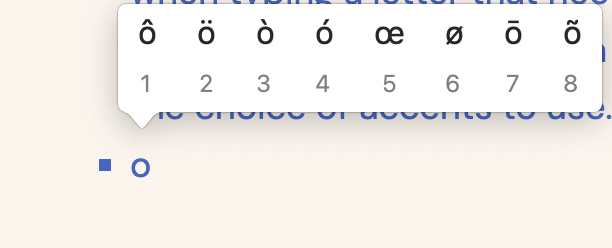
I accidentally found an easy way to toggle the Swedish keyboard (there’s a lot to be said for being a bit slow) on my trusty Mac laptop:
when typing a letter that needs a Swedish accent, like ö, I hold down the letter o until a little box pops up, giving the choice of accents to use.
I imagine the alternate keyboard idea works for other languages as well.
If future generations are reading this post they will no doubt chuckle at how quaint this all is. I imagine years from 2023 you are all microchipped at birth, right? There’ll be no need to search for DNA matches and old documents because everything you think, say or do will be embedded on the microchip the instant you think, say or do it, right? Heck, perhaps I’m getting a bit ahead of myself, but you get the picture, I’m sure.
So, when it comes to translation I reckon I’ve got a pretty good handle on it, albeit, cumbersome handle, back here in March 2023 (we haven’t been microchipped yet – that service is only available to our domesticated pets, oh, and some endangered wildlife). So, until we are microchipped I’ll continue to:
learn Swedish
select the ‘English’ tab on Swedish websites
seek out an online translation service website
And if all else fails, I’ll phone a Swedish neighbour, but I’ve avoided that step because most of my research is done way outside normal waking hours, as is the case with most family historians I suspect, so my translation needs will continue to be met online.
Why couldn’t she wait? Why couldn’t she have just lived a little longer, a little less than a century, until I arrived? And would it have been so hard for her to have written a few notes, left behind a few breadcrumbs I could follow, a few clues? But nothing; not a word.
It’s bad enough she was gone too soon, but she left so many unanswered questions about her life. From my twenty-first century vantage-point I can access online records, so I know where she lived, but they don’t tell me about how she lived; her feelings, her hopes, her struggles.
How did she cope with the news that her husband had been killed in a railway accident at the end of his shift as a conductor? How did she tell three young children their father had slipped on the snowy tracks between the slowly moving carriages as he jumped down from the train? How did she cope emotionally and financially as a single parent after her husband’s tragic death on that cold November night in 1884?
Did she know her first-born son would not return as he sailed away from his Gothenburg home to make a new life on the other side of the world? Did he tell her he was leaving, or did he really stow away on a ship as family folk-lore suggests, with neither an explanation nor a goodbye? Did she grieve as much for him as she surely did for her dead husband?
Was her first-born son difficult to manage without the guiding hand of his father? Was the decision to entrust his care to the Lutheran orphanage by the time he was thirteen, heartbreaking for her and for him? Was theirs a strained relationship made easier by his departure on a ship that sailed away from Sweden? Was it her that wrote to the Missing Persons column in a Sydney newspaper in 1923, looking for her son Adolf?
Bertha Amalia Alexandra Bergman, why couldn’t you wait for your great-granddaughter to be born in Australia in 1950 so she could meet you, so she could know you, so she could ask you?
How often do we look at the multitude of hints available on our Ancestry (or any other) genealogy account and say “oh yes, that’s my ancestor”. We add them to our tree and move on to the next long-lost 4x great-ancestor that we might be looking for.
But, did we reliably identify the ancestor from someone else’s tree, or just take it on face value; the name and time seems feasible, so yep, that must be them.
Meanwhile, the potentially misleading information is shared far and wide across the world, as others seeking someone of that name follow our lead. But what if that person isn’t really our ancestor, and therefore isn’t really the person others are seeking either?
The person we added to our tree generates more hints and information, none of which might be correct. But once again, we figure it looks right so we add great-grandparents, great-great-grandparents, etc., etc., until we have created one heck of a mess in that branch of the family tree. Creating the tangle was easy; untangling it is a whole lot harder.
Where do you start?
You start back at the beginning. When you find the first person you know is correct because you have documentation to prove (verify) it, then move back one generation. Check out the name and dates. Were they old enough to have had the child/children who are listed in the verified generation below? Don’t worry, we’ve all done it; we’ve added a parent who is twelve years older than the child – biologically possible perhaps, but highly unlikely. What doesn’t help is generational names given to children of the same family branch. Four or five generations of William Smith are hard to separate in one tree.
So, how do you verify information?
The best way is to go right to the source. Most cities have records of Births, Deaths and Marriages, and you need to get up close and personal with them, whether it is a physical search in a dimly lit government building or an online search.
Stay focussed on who you are researching, but make a note of anything interesting you might find along the way, just in case (but don’t get sucked into the rabbit hole).
Make sure you record the information you find, and where you found it. I’ve recently started adding a description on my Ancestry family tree, of information I find. When I find details for an ancestor who was born, married, or died in New South Wales (Australia), I make a note in the description for that event, of the registration number, year, and district the event was registered in (if available). That information reminds me that the information is verified, and helps others verify their information if they are researching the same person.
Births are usually searchable if the birth was more than 100 years earlier. My father was born in November 1922, so the day after his (heavenly) 100th birthday last year, I was able to find his birth registration. Marriages and deaths are available for more recent years, at least in New South Wales.
British births and deaths can be found on the General Register Office (Gro.gov.uk) online, with births starting at 1837. You need to register to use the GRO site, but there is no cost unless you order a copy of a birth certificate. Even with the exchange rate in Australia, it is very affordable if you order a pdf copy to be emailed to you.
Another UK site I recently found is FreeReg, but there are plenty of others. Online research puts the world at our fingertips, so there should be no reason we can’t make a valiant effort to validate the information to identify our ancestors. It is time consuming, but not as much as trying to unravel a few generations worth of mistaken identities on our family research journey. Having said that, I tend to place some trust in the information found on the trees of my DNA matches. I figure they should have a reasonable idea of who their parents, grandparents, and possibly great-grandparents were, but I still verify as much as I can.
So, rather than get your branches in a twist, make sure you can say ‘I can identify…’ when adding an ancestor to your family tree. Find the information as far back as you can about births, deaths, and marriages, or census details; record the information; make a note of where you found the records; and add the information to your genealogy program to help others in their search. Sharing information ensures future generations will find their ancestors when we are long gone.
But most important of all: talk to family members about your research – you’ll be amazed at what they remember or know about your family and ancestors. Well, maybe not the family members who roll their eyes every time you mention family history – they’re probably not the best ones to ask – but the others are. Don’t forget to verify the information, and record it somewhere for future generations.
Then you will be able to say with (reasonable) certainty –


 The Family History Vault